Monday, November 25, 2013
The Big Man’s Boat
Tim Koch writes:
Regular HTBS readers will know that we are big fans of Jack Wilson, Ran Laurie, Bert Bushnell and Richard Burnell.
All four of these men had distinguished rowing careers but arguably the highlight for all of them was winning Gold at the 1948 London Olympics. Wilson and Laurie won the coxless pairs and Bushnell and Burnell won the double sculls. The winners in the five other events at the Olympic Regatta at Henley were Merv Wood of Australia in the single sculls, Denmark in the coxed pairs, Italy in the coxless fours, and the United States in the coxed fours and the eight. While I was aware that Britain also came second in the eights, I had no knowledge of any other entries from the host country – until recently. A young women who is learning to row at my club casually mentioned that she thought her grandfather had ‘won something rowing in the 1948 Olympics’. I quickly established that he was not Bert or Dickie, or Ran or Jack. It turned out that he was in the third of the two man boats that Britain had entered: the coxed pair. Sadly, it did not win and in fact came eighth out of nine boats.
The British entry for the coxed pairs at the London Games in 1948, Walker, Scott and James.
‘Granddad’ turned out to be bowman Howard (Bakie) James, aged 24. Stroke was Mark Bodley Scott, aged 25, and the cox was 16-year-old David Walker. All were from Thames Rowing Club. In round one, they were the second of three but in the repechage they lost to the eventual winners, Denmark. There is an nice interview filmed in 2012 with stroke Scott on YouTube. In it he says that they were given ‘a little bit of coaching by a fairly elderly gentleman’ and the impression is that they were very much an afterthought following Laurie and Wilson, two of the finest rowers of the pre war period, and Bushnell and Burnell, both of whom showed promise (Dickie had won the Wingfield Sculls in 1946 and Bushnell in 1947) and who had the great Jack Beresford as their coach.
The coxed pair is the heaviest of all racing boat classes with only two rowers to carry the weight of the cox. It needs two big and strong people to make it move fast but, like the coxless pair, it is vital that they row in the same way. Two otherwise good rowers who have different styles are unlikely to make it work. This need for total teamwork means that the cox is often redundant as a steersman. There is a story that when Steve Redgrave and Andy Holmes were training for the coxed pair in the 1988 Seoul Olympics, cox Pat Sweeney was sometimes not available so they replaced him in training with a heavy tool box.
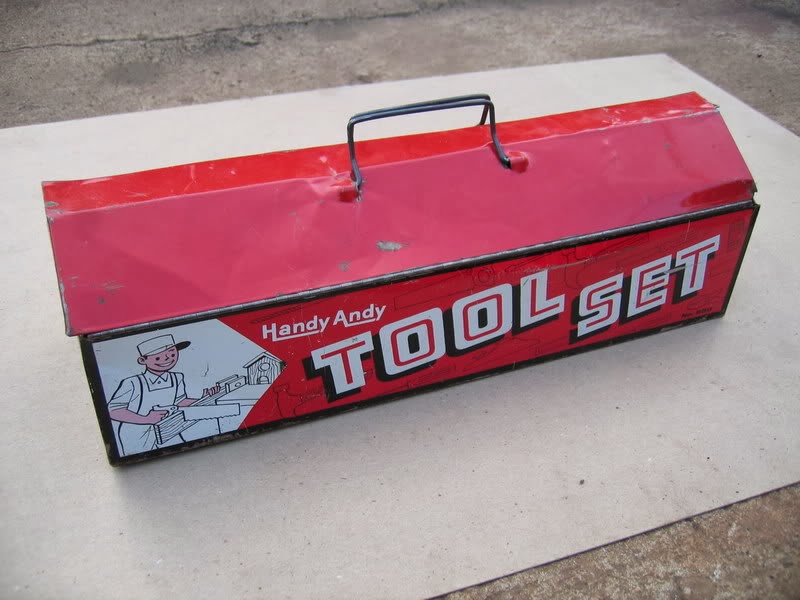
The new cox was the quiet type.
In modern times the coxed pair was never a popular boat at club level in Britain – in fact, I cannot remember ever seeing one. At the top level, it was dropped as an Olympic event after the 1992 Barcelona Games – but at least it had a magnificent finale.
The Italian brothers Carmine and Giuseppe Abbagnle were the firm favourites to win the Olympic Coxed Pairs final on Lake Banyoles on 2 August 1992. They were seven times world champions and one of the great crews in rowing history. At 1000 metres they led by four and a half seconds, the Romanians were second and the British Searle brothers, Greg and Jonny with cox Garry Herbert, were third. With two hundred metres to the finish the Searles had moved up to second place but were still more than a length down on the Abbagnles. The BBC commentator said: ‘Surely it’s too far even for the Searles with their finishing power...’ In the next 25 strokes the British pair went from a boat length down to win by half a length. If you could not watch it on YouTube, you would not believe it.
Wednesday, November 24, 2010
Martin Gough: Andy Holmes, Responsible For British Rowings Success Today
Martin Gough, who is assistant editor of the BBC Sport website, writes here exclusively for HTBS about the memorial service on last Saturday for Olympian Andy Holmes, who died on 24 October from what is believed to be Weil’s disease.
In August 2008, Hammersmith and Fulham Council invited representatives of local sports clubs to drinks at the Town Hall to celebrate the achievements of local athletes at the Beijing Olympics. Two Olympic rowers brought their new bronze medals, a fencer who hopes to compete at London 2012 was introduced to the audience, as was a member of the Sydney 2000 gold-medal rowing eight, resplendent in his Great Britain blazer.
The coach of Furnivall Sculling Club was part of the crowd, lurking in a corner, wearing a lounge suit, chatting to friends. Andy Holmes – the most decorated Olympian in the room, with two gold medals and a bronze too – wouldn’t have minded not being introduced, and probably didn’t expect to be. However, as his former pairs’ partner Sir Steve Redgrave pointed out during a recent BBC television tribute, Holmes was one of those responsible for the situation British rowing finds itself in today: one of the country’s most successful - and consequently best funded - Olympic sports.
As Martin Cross, a third member of their coxed four – which won Britain’s first rowing gold for 46 years at the Los Angeles Olympics in 1984 – said on Saturday: “His dedication and hard work ethic, along with the belief that he, and other British rowers, could beat the seemingly-invincible East German crews and one day dominate their discipline, is part of the legacy that he has left.”
Cross was speaking at a memorial for Holmes, who died last month aged 51, at his alma mater, Latymer Upper School in Hammersmith. The school’s main hall was packed and the atmosphere celebratory for the life of a man whose energy enthused others, but occasionally cracked with emotion, with his absence keenly felt. Family members, including his mother and two brothers, spoke of his love of fun, and habit of getting into scrapes.
Holmes’ first wife, Pam, read a poem about their 20 years together – from their first meeting at a disco, being chauffeured around in his black Cadillac, the birth of their four children and his “mid-life crisis”, when they split up in 1999. Members of the Latymer 1st VIII of 1978, the junior national champions whose recent reunion, with Holmes back in the five seat, saw a group of 50-year-olds beat their current counterparts – one of the strongest school crews in the country – recalled his inspiring influence on their group on the water, and his anarchic side of it.
Those present had no doubt that it was Holmes, rather than actor Hugh Grant, who was the more prestigious graduate of their school in 1978.
Cross spoke of the ruthless drive and dedication that saw Holmes – in the days before central funding and plentiful sponsorship – work on a building site, carrying huge hods of bricks to improve his endurance, in the hours between his morning and evening training sessions.
Richard Phelps, himself a Latymer old boy who made the Great Britain squad, spoke of his awe and fear when Holmes asked to join him in a pair on training camp. “Andy was the hard man of British rowing. He did not sit behind Steve Redgrave, he drove Steve Redgrave,” he said.
Now a teacher, journalist and TV commentator, Cross also read the transcript of an interview he held with Holmes about his “lost years” – the period between leaving rowing in 1989 and resurfacing, thanks to the entreaties of a school friend, as a coach three years ago.
Holmes was setting up a removals business in south London but threw himself into his second passion, drumming, with the same dedication he had once put into rowing – two hours in the morning on the legs, an hour in the afternoon on the fingers. Holmes was no friend of authority. A job as ambassador with the French Rowing Federation ended shortly after he undermined coaches by giving an unregarded duo a training programme that saw them beat the rest of the squad.
He refused to brag about his Olympic success. A cousin was disappointed when Holmes forgot to bring his gold medal to a dinner he had organised, but both were pleasantly surprised when the oarsman discovered the medal in his suit pocket. When Holmes retired, the trophies and medals were consigned to a suitcase in the attic, and daughter Amy only found out about her father’s past life when she saw him featured in a book at school.
The family, including Holmes’ second wife Gabrielle, have attempted to record many of the tributes that have been received over the last weeks, in part to show to his daughter Parker, who was four weeks old when her father died.
Cross said: “One day Parker is going to ask about her Dad and she is going to have the same journey of discovery that Amy did and learn about what a remarkable Dad she had.”
Many, many thanks to Martin Gough for his nice contribution!
Sunday, November 21, 2010
Holmes And Redgrave, A Marriage Made For Gold
A memorial service for Andy Holmes took place at his old school, Latymer Upper, yesterday, on Saturday 20 November. His Olympic partner, Sir Steve Redgrave, describes their true relationship to Christopher Dodd, who is writing this exclusively for HTBS.
The sudden death of Andy Holmes on 24 October sent shock waves round the rowing world, not least at Karapiro in New Zealand where the world championships were in full swing. Holmes was Sir Steve Redgrave’s first Olympic partner and he played a pivotal role in the revival of Britain’s international rowing fortunes in the 1980s.
Holmes and Redgrave raced with Martin Cross and Richard Budgett in the coxed four that put British rowing back on the Olympic gold standard at LA in 1984. In 1986 Holmes and Redgrave won two Commonwealth golds and the world title in coxed pairs, and in 1988 they went on to win gold and bronze respectively in the coxless and coxed pairs at the Seoul Olympics. Before they arrived in Korea, however, their relationship had been branded as a failed marriage, and this reputation passed into lore.
In 1989 Redgrave was determined to continue, but Holmes had had enough. In May, just as the four he was rowing in won a medal in Duisburg, he abruptly turned away from the sport. Since then his self-imposed smoke screen has obscured his contribution, until he re-emerged three years ago as coach to Furnivall Sculling Club in Hammersmith and Langley Academy in Slough.
Redgrave blames a national newspaper for starting the hare of the pair’s bad personal relations, a chase swallowed whole without question by much of the media.
“I never had an argument or a big disagreement with him about anything. Same with Matthew [Pinsent] really. I had one fight with Andy and one slagging match with Matthew. The fight occurred in a training session when we were playing five-a-side football. Skill was not fantastic. The ball got trapped in the corner and I was hacking at Andy’s feet to try and get it out. We came out of the corner locked together and the ball was still in the corner. And that was a good three or four years before we rowed with each other.”
They had problems of a different sort before the Seoul Olympics when their coach, Mike Spracklen, decided to change the rigging of their boat after they lost at an international regatta. Then Andy cracked a rib and they couldn’t race at Henley or at the pre-Olympic regatta. “There were all these stories to write, and they came out with a piece saying we didn’t socialise with each other. Andy was living in Thornton Heath and I was living at Marlow. There was an hour and a half’s driving between us. Winters we used to train at Hammersmith and summers at Molesey because it was the halfway point. We used to come down training for two sessions a day and disappear afterwards. He was married and had his first child. I was single for most of our time together. The whole media picked that up, that we used to hate each other.”
“But,” says Redgrave, “there’s no getting away from it, Andy was a strange character.”
Holmes was notorious for not turning up to training sessions if he felt the boat was not going well. “At one international regatta when he was in the eight he didn’t turn up at the airport because he decided the boat wasn’t good enough. But when I rowed with him he was never late for training. He always had a good reason for missing a session.”
Their pairs’ partnership was forged in a pizza restaurant near Hampton Court Bridge. Redgrave continues, “Mike [Spracklen] had talked to Andy because he was interested in coming back for the Commonwealth and world titles to add to the Olympic one. That was a big thing for Andy. He wasn’t interested in watching sport on TV. It was all about him doing it, and if he wasn’t doing it he was not watching it, and if he was doing it he wasn’t going to watch anyone else doing it. The only other thing he was into was karate. He used to love martial arts.”
Holmes kept himself to himself. At training camps, Redgrave says, he always had his head in a book, usually a book in French. “All he talked about was French culture and French life. He was a deep thinker and a very bright guy, and we got on professionally really well with each other.”
Holmes had other talents, too. “At my engagement party, Andy came up to me halfway through the evening and he said ‘Do you think the drummer would let me have a go?’ He turned out to be a very, very good drummer. I’d been rowing with him for three years and never knew.”
As president of British Rowing, Redgrave was pleased to see Holmes returning to coach on the Thames. “I always knew that Andy could give something back.” They met by chance on the towpath at Henley last year when Redgrave and his fellow steward and partner for three Olympics, Sir Matt Pinsent, were doing aligning duty at the start. “I last spoke to him in 1989. It was really good to see him, and there was no bad feeling between us. Matthew told me last week how nice it was that the three of us had spoken together.”
The real tragedy, Redgrave said as he was preparing to commentate on the strongest British rowing team ever fielded, with finalists in every Olympic boat class, is that Andy will never know the esteem in which he was held.
See also Getting to Know Andy Holmes in RowingVoice 4:6c.
My warm thanks to Chris for his very interesting contribution!
Tuesday, October 26, 2010
Tim Koch On Andy Holmes: 'A Man Of Modesty'
The news that Andy Holmes died on Sunday, 24 October, only 51 years old, came as a shock to the Rowing World. HTBS’s special London correspondent, Tim Koch, writes:
In the tributes to Andy Holmes there have been many comments on his modesty, something rare in a top athlete. There has been particular reference to the story that one of his daughters only found out that her father was a double Olympian from a school book. I witnessed an example of his self-effacing attitude at a reception given by the Mayor of Hammersmith and Fulham held to mark the centenary of the 1908 Olympics (which was staged in the borough). Many British gold medallists from the 2008 Beijing Games were feted as guests of honour but Andy was there only as one of the representatives of Furnivall Sculling Club where he was involved in simple club level coaching. He wore no special Olympic blazer or tie and made no mention of his wins. It amused me to see that he was the most successful Olympian in the room but most people present did not know this, including, I suspect, most of the 2008 medallists. Victorian sporting amateurs held that ‘modesty is inseparable from true merit.’ This was certainly true in Andy’s case.
Monday, October 25, 2010
Rowing Champion Andy Holmes Dies, Age 51
Earlier today the news came that British oarsman Andy Holmes, who was born on 15 October 1959, died last night, 24 October, age 51. It was reported last Monday that he was taken ill of what the doctors thought was a bacterial infection called the Weil's disease. Holmes began to row when he was 12, and won the Thames Challenge Cup at the age of 19. At the 1984 Olympic Games, he won the gold medal in the coxed four, together with Steve Redgrave, Richard Budgett, Martin Cross, and cox Adrian Ellison. Holmes and Redgrave also took the gold in the coxless pair and the bronze in the coxed pair at the Seoul Olympic Games in 1988.Read Rachel Quarrell's article in today's The Daily Telegraph by clicking here.
Find The Daily Telegraph's obituary here.
Read Peter Nichols's obituary published in The Guardian, here.
Martin Cross, Holmes's former team mate, remembers him in The Guardian, here.
Here is a short clip from Andy Holmes's and Steve Redgrave's race in the Seoul Olympic Games, final coxless pair with 1,000 metres to go:
Click here to read what British Rowing is saying about Leptospirosis or Weil's Disease.