Photograph: Werner Schmidt

Tuesday, August 14, 2012

Fairbairn and von Gaza at the 1911 Holland Beker

At the 1911 Holland Beker Regatta.

A couple of days ago, not only did editor Johan ten Berg send some interesting news about Co Rentmeester’s latest book, which HTBS wrote about yesterday, Johan also sent along a marvellous old photograph from the 1911 Holland Beker Regatta. In his e-mail, Johan writes that he found Stephen Cooper’s two-piece extract from his book The Final Whistle about George Eric Fairbairn very interesting (posted 1 August and 2 August) as Johan has used the photograph on top in his book Holland Beker.

The distinguished looking gentleman in the middle – back row in a cap and bow tie – is Eric Fairbairn, who competed for Jesus College, Cambridge. The organisers of Holland Beker still have his entry form, Johan writes. Fairbairn looks a little unhappy in the picture which might be explained by the fact that he lost the final by half a boat length to the German gentleman sitting on the left, holding the Cup, the famous sculler from RG Wiking Berlin, Bernhard von Gaza, who also became German champion in the single sculls that year. The German would return the following year to claim the Holland Beker Cup one more time. Not only did von Gaza row well, he also wrote books about how to row and scull.

Sculling for the Holland Beker in 1911 was maybe not the first time Fairbairn and von Gaza met. As Cooper writes in his The Final Whistle, Fairbairn took a silver medal in the coxless pairs at the 1908 Olympic Rowing Regatta held in Henley-on-Thames, where von Gaza also took a medal, a bronze in the single sculls.

The fellow sitting on the right in the photograph is Kurt Hoffmann, who became champion in the Junior class. (In 1912, Hoffmann would beat von Gaza to become the German champion in the single sculls.) Johan ten Berg has very kindly translated the caption of the photograph as it appeared in the sport magazine De Revue der Sporten: “Sitting on the left: Bernhard von Gaza (RG Wiking Berlin), champion seniores and on the right Kurt Hoffmann (Favorite Hammonia Hamburg), champion juniors. Standing on the left: Carl Jurrjens, J. J. Blussé, Prof. Damsté, Fairbain (Cambridge), G. W. A. van der Zee, Van Waning Bolt, the first Dutchman single sculler ever”.

Johan writes: “The first Holland Beker was lost by prof. Damsté in 1886 in a race against F. Schilling. Since Damsté is in the photo – I suppose he was an official – I speculated that the man in the background is F. Schilling. His portrait from 1887 is in the Holland Beker, too. I think it is the same man. It makes sense that he was there because it was the 25th anniversary race.” Johan continues, “It was common in those days that all competitors joined for the official photograph, that is why Fairbairn is in the photo as well.” The Cup that Hoffmann won was lost for half a century, but Johan accidentally found it when he was doing research for the Holland Beker book.

Sadly, neither Fairbairn nor von Gaza would survive the First World War. Fairbairn was killed in 1915, while the seven-years-older von Gaza died in 1917 at Langemark, West-Vlaanderen in Belgium.

A warm thank you to Johan ten Berg for sharing this information and the lovely photograph from the 1911 Holland Beker. By the way, Johan is already working hard on his next rowing book, a book about Dutch rowing which is to be published in 2014.

Monday, August 13, 2012

Co Rentmeester: Oarsman And Photographer

American sculler Jim Dietz training on the rowing machine for the 1972 Olympic Games. Photograph © Co Rentmeester.

The other day, HTBS received an e-mail from Johan ten Berg, editor in Holland. Amongst the publications that Johan has been the editor of is the wonderful book Holland Beker, which was reviewed on HTBS on 28 September, 2011.

The latest book that Johan has been working on is by Co Rentmeester, who represented the Netherlands in the single sculls at the 1960 Olympic Games in Rome. After the Olympics, Rentmeester emigrated to the USA where he began to study photography. He earned a degree in Photography in 1965. He immediately started working for Life magazine as a freelancer, and was hired a year later as a staff photographer. Rentmeester covered the Vietnam War for Life and also the 1972 Olympic Games. Before the latter, Rentmeester created a beautiful photo essay about the American sculler Jim Dietz's pre-Olympic training. (Jim Dietz was inducted into the Rowing Hall of Fame in 2010) This essay is re-published in Rentmeester’s new book, Johan tells HTBS. The book, which covers many other sports and is being printed right now, is bilingual, Dutch/English, as there is a market both in Rentmeester’s native country as well as his ‘adopted’ country.

In 2006, Co Rentmeester produced and directed the beautiful The Perfect Stroke, a 55-minute film documentary of the famous regatta Holland Beker. Among the many scullers in this film is the recent Olympic champion Mahé Drysdale. Watch the promotional trailer below.


Rentmeester is still taking pictures and also coaching rowing in America.

More about the Holland Beker in tomorrow's post.

Sunday, August 12, 2012

Rowing In The Human Race

(Photograph © Ann Woolliams)

Rowing in the Human Race

The rower is glimpsed,
Physical perfection,
As he pounds the water
In competition,
Flexed physical perfection,
Desired, envied,
Made romance of
By those watching him,
Glimpsed prefection the eye possesses,
Like flesh possesses shadow,
The perfected moment experienced
That eludes one
As one is experiencing it.

Philip Kuepper
(July 2012)

Saturday, August 11, 2012

Rowing, The Fourth

Rowing, the Fourth

When the rower had finished
His morning practice,
He thought to have fun,
And worked his shell in such a way
As to sew the design of the flag
On the surface of the river.
It was, after all, the Fourth,
His own watery firework
He took the liberty to execute
In salute.

Philip Kuepper
(4 July, 2012)

Friday, August 10, 2012

‘Bert And Dickie’: Drama Or Farce?

Let's continue with the 1948 Olympic rowing from a little different angle. Here HTBS's Tim Koch writes about the BBC film Bert and Dickie (called Going for Gold in America):

It is normally advisable to take a ‘Dr Johnson’ approach to any drama centred on rowing. The 18th-century man of letters famously said:

‘Sir, a woman’s preaching is like a dog’s dancing on his hind legs. It is not done well; but you are surprised to find it done at all.’

Films about rowing are rare and are rarely done well. Film makers prefer to make dramas about popular land based sports as the action sequences are considerably easier to shoot and edit to produce a reasonably convincing scene where an actor is portraying a top class athlete. As far as I know the only rowing sequence in a movie that convinces those who know about the sport is the Henley scene  in The Social Network. When ‘rowing dramas’ are made they tend to closely follow the clichés set out in the guide ‘How to Make a Rowing Movie’ on the now sadly inactive ‘Tideway Slug’.

Geoffrey Palmer is playing Dickie's father, the 1908 Olympic rowing champion 'Don' Burnell.

Bert and Dickie, however, threatened to be different. Firstly, it was made by the BBC who, famously, are rather good at this sort of period drama. Secondly, it had what film and TV people call ‘high production values’ that is, they spent time and money attempting to get it right. Thirdly, it employed some very talented actors in both lead and supporting roles. This included the wonderful Geoffrey Palmer who, as far as I know, had never appeared in anything bad – despite always playing much the same character. Finally, a large part of Britain and the world are in an ‘Olympic Mood’. At the present time many of us are susceptible to a ‘feel good story’ of plucky chaps winning against the odds. I wanted to like this programme.

The basic ingredients of a dramatic story are all there. An ‘odd couple’ are thrown together by circumstances not of their making. They do not like each other. There is social snobbery and economic deprivation. Eventually they learn to ‘pull together’ because they realise that they have a common goal and because they discover that they have a common problem. In this case, the problem is slightly mad fathers, Dickie’s dad representing the old order where it’s the taking part that counts, Bert’s dad representing the future, believing that winning is all. The tension on the Henley Reach is punctuated by gentle humour on land. There are several delightful cut aways to conversations between the Prime Minister and Chairman of the British Olympic Committee as they wrestle both with the great concepts and the mundane detail of the Games. There are funny and touching scenes where post war ‘austerity’ Britain attempts to make the best of things, especially in the presence of the over cossetted Americans. Unfortunately, the cutaway scenes where Bert’s banished girlfriend (a slightly superfluous role) watches the races from a TV shop in Scotland with a local policeman relaying the commentary to the crowds outside (and to the viewer of course) is an unsatisfactory device. Possibly it is some sort of homage to the British ‘Ealing’ comedies of the 1950s.

Of course, the eternal problem of a story ‘based on real events’ is that we all know how it ends. Thus we have to enjoy the journey that takes us to the predictable and inevitable conclusion – in this case Olympic glory and approval from respective fathers.

A review of this journey on Hear The Boat Sing must be slightly different to one in most other places. ‘Dramatic criticism’ is one part but for rowing historians there is also the question of the accuracy of people, events and objects.

How does Bert and Dickie work as a piece of entertainment? It is commonly observed that ‘drama’ is real life with the boring bits taken out. In this necessary process the characters can become slightly one-dimensional, emotions can, unnaturally, change in an instant and all difficulties are unrealistically permanently overcome. ‘B and D’ is not immune from these faults – but very few dramatic productions are. For me, these criticisms did not spoil my enjoyment of ‘the journey’ from start to finish. The combination of an intelligent script, good acting, high production values and wonderful cinematography (with light use of CGI) makes a very simple story work. It is, simply, a bit of fun. For Brits, still basking in post-Olympic Regatta success with their cynicism blunted, the pleasure is highlighted.

Was it ‘accurate’? In a couple of words – pretty much. Yes, the sculling was bad, we knew it was going to be, let’s accept it and move on. The boats and equipment seemed correct. The costumes were fine bar the inaccuracy, pointed out by Jack Beresford’s daughter, that her ‘father’ was portrayed wearing a brown suit at the Olympic Regatta! The stand in for the Leander clubhouse was a little over grand and the unimpressive Leander pontoon was replaced by the more substantial Eton Rafts but there is nothing ‘wrong’ with such things. The only inaccuracy that made me wince was when Don Burnell said that he won an Olympic gold medal in 1908 in ‘the men’s eights’. I am sure that Burnell senior would have never made such a 21st century gender distinction, it was like having the character say something like ‘you is well good’. On the other hand, I did actually learn something. The film portrayed Jack Beresford Jnr. as, in Chris Dodd’s words, ‘mentor rather than coach’. I would have dismissed this as one of the things film makers do to keep the story flowing had Chris not agreed that this was in fact the case.
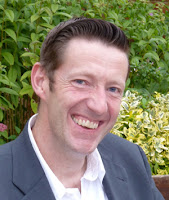
I must further commend writer William Ivory (on the right) and director David Blair because, not only was their production reasonably accurate, but it was also brave in that it did not avoid introducing slightly difficult ideas for a non-rowing audience. In the best traditions of the BBC, there was little ‘dumbing down’. There were references to rowing’s contracted amateur – professional debate, detail on rigging and rowing technique, and a discussion on using the repêchage system to gain an advantage. These ideas could have easily been passed over to keep the interest of the least attentive viewer, something all too common in modern film and television.
 
The ‘clincher’ for me (and anyone associated with this blog) came with a scene towards the end, just before ‘the big race’. Bert is handed a note that says: ’Make the boat sing’. It almost made up for the over sentimental father-son reconciliations on the finish pontoon. However, Bert and Dickie, for all its predictably, is a dog that dances well.

There is a tribute to Bert and Dickie by ‘JBT’ on YouTube, here.

Thursday, August 9, 2012

9 August 1948: The Final Day At The Olympic Rowing Regatta In Henley

Olympic champions Jack Wilson (stroke) and Ran Laurie (bow) in the foreground after they have won the Coxless Pairs at the 1948 Olympic Regatta in Henley. In this photograph is also silver medallists Hans Kalt (stroke) and Josef Kalt (bow) of Switzerland. Italy took the bronze.

Although, the Olympic Rowing Regatta at Eton Dorney is over, HTBS is not done with Olympic rowing. Let’s take a look at the 1948 Olympic Rowing Regatta in Henley-on-Thames through some old photographs. Today, 9 August, it is exactly 64 years ago the finals were rowed on the Henley course. One photograph is easily recognized (above), showing Jack Wilson and Ran Laurie after they have just crossed the finish line in the final that gave them the Olympic gold in the Coxless Pairs – or the 'Pairs Without Cox' or 'Coxswainless Pairs' as it was called at that time. The other photographs from this regatta I have never seen published before. Enjoy!

All the equipment from the 1948 Henley Royal Regatta was left untouched to make things easier for the Olympic Regatta in Henley. However, an additional stand to take 4,000 spectators was erected, as was a special Press Box (on the right) which could take 150 members of the media.
*Update: This has been proven to be wrong, it's the Royal Canadian Henley, please see more here.

In this photograph from a repechage heat, the British double, with Bert Bushnell and Dickie Burnell, is way ahead of Holland and third-placed Argentina. Burnell writes in his Swing Together (1952): ‘Personally I do not like the repechage system, because I find it demoralizing to know that the first heat has not got to be won’. However, this being said, Bushnell/Burnell deliberately lost their first heat, so they would not meet the Danish double of Ebbe Parsner and Aage Larsen in the semi-final as the Danes were the favourites to win the gold. But take a look at the photograph again: despite the difference in the oarsmen’s heights – Burnell was 6ft. 4in. (193cm) and Bushnell was 5ft. 9in. (175cm) – they are beautifully well together in the water. Burnell wrote about their stroke: ‘Bushnell was inclined to over-reach; I was on the short side in my forward swing. The result was … we reached naturally to about the same place.’ (in Swing Together)

Olympic champion in the Single Sculls Mervyn Wood of Australia is congratulated by silver medallist Eduardo Risso of Uruguay. Romolo Catasta of Italy came third. Wood had won the 1948 Diamond Challenge Sculls by beating Bert Bushnell in the final.

In the final of the Coxed Pairs Finn Pedersen, Tage Henriksen, and Carl-Ebbe Andersen (cox) of Denmark easily won over Italy with Hungary coming in third.

Wednesday, August 8, 2012

Rowing And Politics, A Good Mix?

British Rowing Chairwoman Di Ellis CBE and Sir John Major, former Tory P.M. and National Lottery innovator. Photo: British Rowing's website.

Writing about rowing, I try not to mix in politics as sport and politics seem not to blend well. Just look at the hullabaloo in Germany right now, when one member of the nation’s women’s eight left the Olympic Games in London when it was revealed that her boyfriend was a right-wing activist (on top of everything, he was a former oarsman!); her poor choice of a boyfriend was scrutinized in the German national media for days, and in the international media as well.

However, we can not neglect the impact politics or a politician can have on sports. In an article in the current issue of Rowing News (Vol. 19, No. 7, August 2012), Chris Dodd asks Mike Sweeney, the Chairman of Henley Royal Regatta, to name the most important person behind British Rowing’s rise from the bottom position it had in the beginning of the 1970s. Without hesitation, Sweeney replies: John Major – the Tory Prime Minister who followed the ‘Iron Lady’, Margaret Thatcher, at the helm of the United Kingdom in 1990. You can like or dislike Major, but what was good for the different sports in the U.K. was that Major, in Allan Massie’s words, ‘gave Britain the National Lottery’.

And this is what Mike Sweeney means with his answer to Chris Dodd’s question. British rowing gained a lot from the National Lottery, and looking back on the record heap of medals that the British rowers managed to collect at these latest Games, many politicians should envy this particular legacy of John Major. That the former P.M. is still popular in the British rowing world is shown in this article published on British Rowing’s website, “Sir John Major applauds GB rowers”.

Many countries support their athletes, especially for upcoming Olympic Games, but a renown example of rowers who do not get any monetary support from their country’s government is the American rowers, which HTBS has written about before.

Tuesday, August 7, 2012

Bonding With Your Children

As a parent in the 21st centuary, you would like to bond with your children. Just look at HTBS’s Greg Denieffe who took his young daughters Hannah and Maeve to the Olympic Rowing Regatta at Eton Dorney (in a cute post published earlier today). I try to bond with my children, too. Yes, you guessed right, I try to lure them to different rowing events as well. So far, they have been to a couple of the Yale-Harvard Regattas on Thames River in New London, and to one Head of the Charles in Boston.

Before our son Anders, soon to be 7, was born, Mrs. B. and I took our then barely 3-year-old daughter Ingrid to London, where I, of course, dragged them both out to Henley-on-Thames to visit the River and Rowing Museum. What a visit! Poor Ingrid was ill, and it truly was a vacation in Hell! (There is no room for details on this blog.)

Ingrid is doing much better now, and just look how she is handling the sculls in the picture above.

I don’t know if Anders will ever be into rowing, but with his length, weight, and attitude he would be a brilliant cox. Of course, right now he is mostly interested in playing with his Lego toys. Thanks to the British newspaper The Guardian’s Olympic ‘Brick by Brick’ series, Anders and I found a very happy father and son moment when we watch the Guardian-Lego version of the Men’s Coxless Fours’ A Final where GB’s Alex Gregory, Pete Reed, Andrew Triggs-Hodge, and Tom James took an Olympic gold.

Watch the race below:


I will try to remember this very special moment Anders and I had next time I step on a little Lego piece on the rug in the living room….

Going With Dad To Meet The 2012 Olympic Stars


You have to love those rings.

Just to prove Tim’s point on mixing with the ‘great and good’ in his comment in yesterday’s blog post, the 1,000th post on HTBS, Greg Denieffe of HTBS sent some photos from his visit to the Olympic Rowing Regatta. Greg brought his daughters, Hannah, 6, and Maeve, 3. Greg writes, ‘There are plenty of wonderful photos on the internet and in the papers, but these are the ones that are special to me’. I am sure that Hannah and Maeve will agree, and in many decades from now the girls will tell their children and grandchildren how their father brought them to the Olympic Rowing Regatta at Eton Dorney so they could talk to the Olympians and hold their medals - it was at the 2012 London Olympic Games.

When we didn't have any Olympic tickets one day, we went to the 1948's instead.
Richard Chambers from Coleraine shows Hannah and Maeve his ML4- silver medal.

Peter Chambers got a silver, too.

Got our hands on an Olympic Torch. Unfortunately, we had to give it back.

Bowman Kasper Winther of the Danish lightweight four shows Hannah his bronze medal after a breathtaking final. RSA won their country’s first ever rowing gold denying GBR on the line after DEN had led for 1,800m.

The one and only Iztok Cop of Slovenia with his hard won 4th Olympic medal. He turned 40 in June and won his first in 1992. This was Hannah’s favourite moment of a very special day.

(Copyright © photographs Greg Denieffe)

Monday, August 6, 2012

The 1,000th post!


I am happy to announce that this post is the 1,000th blog post on HTBS. The first post was published on 12 March, 2009, and up to writing this, HTBS has had slightly more than 145,000 visits (and slightly more than 252,500 page views) by readers from more than 100 nations; not bad, I guess, for a blog on rowing history!

And to celebrate, what could be more appropriate than a photograph of HTBS's own London correspondent Tim Koch at the Olympic Rowing Regatta at Eton Dorney holding the Olympic Torch. Where he got it from I don't know...

Sunday, August 5, 2012

Rule Britannia

The British Four leads Australia and the Unites States at 1,750 metres.

After having returning from Eton Dorney, HTBS’s Tim Koch gives here an euphoric report,

It is said that you should never post anything on the Internet when you are angry or drunk. As I write this, having just returned from the final day of the Olympic Regatta at Dorney Lake, I am very far from angry but I am drunk – not from alcohol but from the success of British Rowing. Readers not from these islands will have to forgive the parochial nature of this report but the last four days of rowing finals have been rather exciting for England, Northern Ireland, Scotland and Wales. Where to start?

WLwt2x – Katherine Copeland and Sophie Hoshing.

All of the 47 strong GB Squad reached the finals. British rowers and scullers have won four golds, two silvers and three bronzes – a new record for a modern Olympic regatta. View the 2012 rowing medal table here (but also the 1908 medal table here).

Until this week British female rowers have never won gold at any Olympics  - now they have changed this record by winning not one, not two but three events. The double scull of Watkins and Grainger and the pair of Glover and Stanning were ‘expected’ to win but the lightweight double of Hosking and Copeland was more of a surprise (especially to them, I think).

The great ‘needle match’ between the old rivals Australia and the British men’s heavy weight four resulted in the fourth win in four Olympics for the Brits. It was also coach Jürgen Gröbler’s ninth gold in nine Games, three for East Germany and six for Britain, a remarkable record.

Miraslava Knapkova winning the Women’s Sculls.

It is true that there have been a couple of ‘disappointments’ for the home crowd, but it is a mark of the ridiculously high standards that British rowing supporters now have that two silvers are regarded as below expectations. These came in the men’s lightweight doubles and men’s lightweight fours, two races that were both lost to the British crews in the closing seconds. It could so easily have been six victories for a country that did not win any events in the Olympic Regattas of 1952, 1956, 1960, 1964, 1968, 1972, 1976 and 1980!

In his closing speech, Denis Oswald, the President of FISA, the International Rowing Federation, said that the 2012 London Olympic Regatta was the ‘best ever’ for four reasons. These were the standard of the competitors, the excellence of the organisation and the volunteers, the Eton Dorney venue itself and finally ‘the wonderful crowd, cheering and loving our sport’. Well said. Rio has a very tough act to follow.

Ready to go…

The four flags.

The remarkable 2,000-metre zip wire carrying the overhead TV camera. No camera has covered the whole length of the course before.

Soulmaz Abbasiazad of Iran in the W1x D Final. The Games are taking place during Ramadan.

The British Four leads Australia and the Unites States at 1,750 metres.

M4- Stroke Andrew Triggs-Hodge called the row a masterpiece but added that it has been utterly terrifying.

What it is all about – Knapkova’s gold medal.

MLwt2x – The Danes Rasmussen and Quist start to move in on the British double of Purchase and Hunter.

These charming supporters of Team GB are members of Leander.

You could be forgiven for thinking that every supporter at Dorney was British, but these, slightly disappointed, gentlemen were from Gothenburg, Sweden.

Men of the Coldstrean Guards recently came back from Afghanistan. The troops, last minute stand-ins for failed private security, undertook their duties with humour and efficiency.

Band of the Royal Marines and a young recruit.

Olympic Rings and British supporters. Earlier there was a marriage proposal in front of them.

(Copyright © text & photographs Tim Koch)

Saturday, August 4, 2012

A Silver Or A Bronze Or The Potato Medal?

Synek, Drysdale, and Campbell - three happy Olympic medallists?

Yesterday, in the A final of the men’s single sculls at the Olympic Regatta at Eton Dorney, Mahé Drysdale (NZL) took the gold medal, Ondřej Synek (CZE) took the silver, and Alan Campbell (GBR) took the bronze. Lassi Karonen (SWE) came in fourth. Of course, as a Swede, I wanted Karonen to grab a medal in this exciting race, but alas he and the rest of us rowing interested Swedes have to be satisfied with what the Danes call Kartoffel Medalje, the Potato Medal. This is probably the most unwanted place in a rowing final, in that you are so very close to an Olympic medal, but after all the hard work, you get Nothing!

Let’s have a look at these scullers’ times:

M. Drysdale 6:57.82
O. Synek 6:59.37
A. Campbell 7:03.28
L. Karonen 7:04.04

At least between Campbell and Karonen it was a close race at the finish line.

Yesterday on the American radio station NPR, its science correspondent, Shankar Vedantam, made an interesting observation regarding the ‘happiness’ of winning a silver or a bronze. Scientists have done research that proves that silver medallists are ‘unhappy’ with their performances while bronze medallists are ‘happy’. Read the article and listen to the story here.

So, did Campbell look happier than Synek at the prize ceremony? I don’t know, but Campbell was very pleased, no doubt about it. After all, he nearly won the unwanted Kartoffel Medalje but did not.

Congratulations to the three medallists!

Update 5 August, 2012: A good-hearted man, the British bookshop owner David Mitchell, has taken the matter into his own hands and solved it this way!

Friday, August 3, 2012

Honouring The 1912 Olympic Rowing Champions


Last Sunday, 29 July, an anniversary was held to celebrate the Leander eight and their coach who took a gold medal at the 1912 Stockholm Olympic Games. One of the descendants, Victoria Fishburn, granddaughter of Leslie Wormald, wrote a two-part article for HTBS about the Leander oarsmen and how it was to organise the 124-people strong get-together, “Stockholm 1912 – London 2012: An Olympic Centenary”, Part 1 & Part 2. Here Victoria follows up with an article about how the party went. The beautiful photographs showing unique rowing memorabilia are taken by Will Houston, great grandson of Stanley Garton. HTBS would like to thank them both for sharing the event with our readers.

It was a typical English Sunday, a mixture of sunshine and thunderstorms, when 124 people, all connected to each other by having ancestors in the Leander boat who took an Olympic gold medal one hundred years ago in Stockholm, got together to celebrate. An old-fashioned pole marquee, swathed in Leander pink, welcomed the crowd of descendants who ranged from an 88-year-old to a 3-week-old. They brought with them their ‘family gods’ in the form of rowing memorabilia. Four of the Olympic gold medals arranged in cabinets, frames and on silver cups, leather photograph albums of the crews of the early twentieth century, blades of oars, photographs and articles and even one preserved Olympic wreath awarded to Leslie Wormald. The eight oarsmen, the cox and the coach were reunited in this tent with their descendants marvelling at the collective talent on display.

Pots and medals which once belonged to the successful oarsmen who rowed for Leander, representing their country in the eights at the Stockholm Games.

Pimm’s and Elderflower lemonade was followed by a lunch of Coronation Chicken, an English summer favourite, meringues and strawberries at long white trestle tables decorated with flower pots of sweet peas. Then one of each of the rowing families got up to speak movingly about their father, grandfather or great grandfather. They gave poignant accounts of their forebears, telling the stories on which they had all been brought up, of rowing triumphs of a hundred years before. As one guest so eloquently put it: ‘It was a lovely event, quintessentially English, celebrating amateur sport of the highest level in a flower-show tent on an exquisite village green; even the English weather genteelly timed its appearance to cause minimum inconvenience.’ A 1913 model Vauxhall graced the scene and a Tiger Moth biplane, flown by George Woods, great grandson of Stanley Garton, made a flypast.

It was an unlikely occasion, born from an idea, and brought to a conclusion on Sunday when scattered families reunited with each other and became part of the wider family of the Leander eight of 1912.


1911 Grand Challenge Cup won at Henley Royal Regatta by Magdalen College, to which most of the oarsmen in the Leander eight belonged.

Young and old, gathered inside the tent to listen to the Leander oarsmen's children, grandchildren and great grandchildren speaking about the 1912 Olympic Champions.

Young ladies served Pimm’s and Elderflower lemonade - how very English!

A 1913 Vauxhall

One hundred twenty-four descendants of the Leander eight and their coach, 'Tarka' Gold, happily gathered outside the tent for a group photo.

(Copyright © photographs Will Houston)